
Thomas Fink on The Broken Heart: Crafting a Grand Prix-Winning Story
The Grand Prix is among the top distinctions awarded at the Cannes Corporate Media & TV Awards, recognizing productions that combine cinematic quality with strong emotional and narrative impact. In the last edition, the Grand Prix Corporate was presented to The Broken Heart, a 3-minute short film for Novo Nordisk Sweden directed by Thomas Fink, for its restrained and carefully crafted approach to heart disease prevention.
In this interview, Thomas Fink discusses the film's development, the creative decisions behind its visual and emotional tone, and the production challenges of bringing the story to the screen. He also reflects on the significance of receiving the Grand Prix and on how this recognition may shape his future work.
“I was very focused on creating a film that could be felt rather than simply understood.” -Thomas Fink
From brief to cinematic concept
- How did the concept for The Broken Heart come to life?
-
The initial idea and ambition came from the client: to make audiences feel the importance of heart disease prevention by following a young man making unhealthy lifestyle choices and ultimately experiencing a heart attack later in life.
As the director, I developed this brief into a cinematic concept and a script built around a sequence of everyday-life moments. Small, recognizable situations that gradually accumulate into something more serious. The intention was to create a narrative that feels both intimate and universal.
I was very focused on creating a film that could be felt rather than simply understood. At the same time, it was important not to become too heavy-handed, moralizing, or overly explicit. The story needed restraint, allowing the audience to connect the dots themselves and reflect on their own choices.
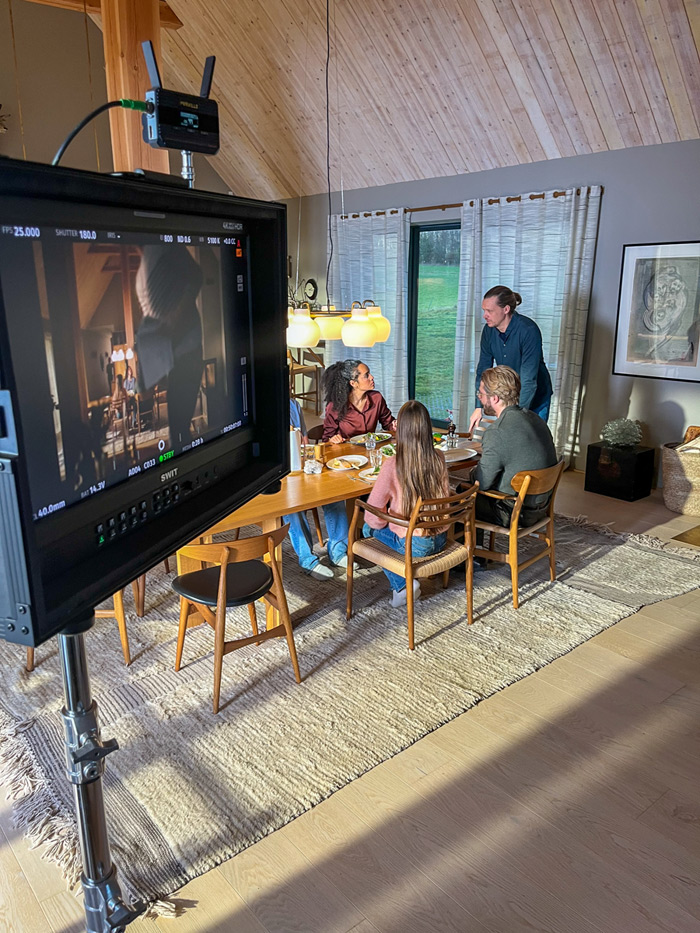
I worked closely with the DOP, Olav Smidt, from an early stage to shape a visual language that could support the film’s emotional ambition. During production, I also brought in the editor, Freddie Smith, early in the process. After the first days of shooting, he looked through the footage and contributed valuable feedback. This allowed us to refine and adjust certain scenes before the final days of shooting.
Olav’s and Freddie’s contribution to the final film was significant, and the close collaboration between direction, cinematography, and editing created a strong creative synergy.
The challenges
- What was the most challenging aspect of bringing this story to the screen?
-
Many things. One of the biggest challenges was showing the same character both in his twenties and in his early fifties. We had to age him convincingly. We considered doing this in post-production but ultimately chose practical make-up.
We tested different approaches with the make-up artists on the actual actors, and to be honest, we weren’t fully convinced at first. The balance had to be exact: not too little, so the age difference wouldn’t register, and not too much, so it wouldn’t look artificial or unconvincing. This required a lot of dialogue with the make-up team, but I’m very happy with the final result.
Another challenge, as always, was assembling the right crew. Together with producer Maja Toft Andersen, we carefully handpicked each team member. Most of us had not worked together before, which meant trust and communication were essential from the beginning.
I think we succeeded in bringing together a very talented team and in creating a positive and trusting atmosphere where everyone felt seen and heard. As a director, I see my role not only as communicating a vision, but also as creating a space where people feel confident and inspired to be creative.
- On the other hand, what was the most rewarding part of working on this project?
-
We’ve received a lot of feedback from audiences. Many people have told us they were deeply moved by the film and that it made them reflect on their own lives and or the lifestyle choices in their family.
It may sound a bit cliché, but this is the greatest reward - if the film can move people and potentially influence someone.
From a more professional point of view, it means a great deal that a jury of film professionals from around the world has recognized our work. The client was very happy with the result and they backed our decision to submit the film to festivals, and they’ve been very pleased with the recognition it has received, including the Grand Prix, Best Director, and Production Company of the Year at the Cannes Corporate Media & TV Awards.
- What made this project different from other corporate videos you’ve produced?
-
I direct many corporate projects with the ambition of not making them feel like traditional corporate films. I always ask: what do we want the viewer to feel after watching? And how do we make it not look like a corporate film?
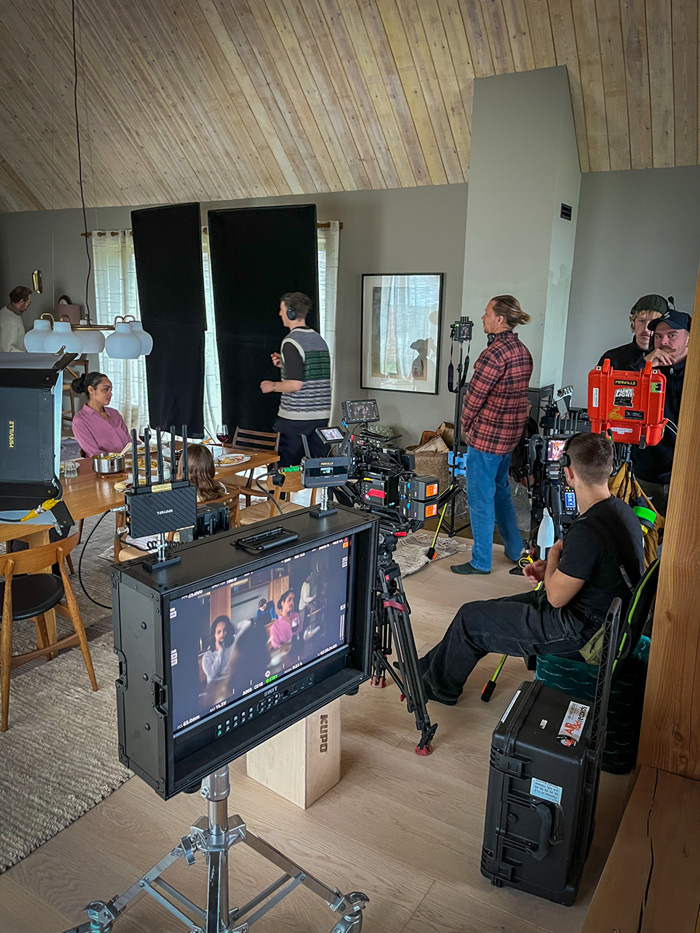
It was the same for this project. The difference was that I usually direct with smaller crews of two to five people and often feature real people rather than actors. On this project, however, we worked with professional actors and a larger crew of around ten to twelve people.
This opened new possibilities in directing, collaboration, and creativity. Working with actors made it possible to explore the emotional impact in new ways. It was a real eye-opener for me to direct Tobias Steiner and Rebecca Langley and help shape performances that felt authentic and honest.
Again, it was all about balance. If the acting was too subtle, the emotion we wanted to communicate might go unnoticed; if it was too strong, it could feel exaggerated or unconvincing. Finding that balance together with the actors was a great experience, and I’m very happy with their performances.
Recognition and what comes next
- What does winning the Grand Prix Corporate mean for thomasfink.dk and for this particular project?
-
Winning the Grand Prix has meant a lot for both the project and the client. They feel that their original idea has been brought to life and recognized on an international stage.
It has also meant a great deal for the core team. The experience has brought us closer together and strengthened our shared ambition to collaborate again in the future.
For me as a freelance director, the recognition has naturally been very rewarding. Attending the award show in Cannes was a unique experience, where I met many inspiring people and colleagues from around the world. Winning the Best Director award was a major milestone and something I’m very proud of.
- How do you see this award impacting your future work?
-
For me, the award signals that there is space and an audience for the kind of storytelling I want to pursue: work that is emotionally driven, human, and grounded in real-life experiences.
As a freelance director, recognition at this level helps build trust. It makes it easier to enter conversations with new clients, agencies, and collaborators who are looking to create something that goes beyond traditional corporate or branded communication.
I work across sectors such as health, environment, tourism, and adventure, and I hope these awards will open the door to new collaborations and projects where there is both the courage and the creative space to explore storytelling. Whether in the Nordics or internationally, my ambition is to continue developing work that connects with audiences in a meaningful way.
- What types of stories are you hoping to tell next?
-
I’m drawn to stories with social or environmental impact, and I work across formats from brand storytelling and corporate films to documentaries and impact-driven campaigns.
That is still the direction I want to pursue. Winning the Grand Prix doesn’t change that.
I want to create films that can be felt, that leave a lasting impression and ideally contribute to positive change. I believe we live in a world that needs more positive storytelling. Stories about people who inspire us and work to make the world better.
Those are the stories I want to tell.
Explore more
Do you believe that your next project has the narrative strength of ‘The Broken Heart’?
Entries for the Cannes Corporate Media & TV Awards are now open.